Monday, April 10, 2023

Medieval Music


Miniature (illuminated manuscript) from: Liber choralis parvus continens missas vesperas et alia officia par S. Leonardi confes

 https://commons.wikimedia.org/wiki/Category:A_as_an_initial_in_illuminated_manuscripts#/media/File:Liber_choralis_S.Leonardi_(MCM),_XLIII_Assumpta_est.JPG


Interesting Composer who would be fun to have cameo in first half of 13th century setting (i.e. wip):

Julian of Speyer


Medeival music with Manuscripts 


Farya Faraji -- not just medieval, but over all fascinating discussions of historically accurate performance, (though the following is close enough for current wip:)

Chevalier Mult Estes Guariz - French Crusader Song

Sunday, January 22, 2023

Palais de la Cite, Paris


http://projects.mcah.columbia.edu/medieval-architecture/htm/related/ma_paris_palais_cite_01.htm

France, Paris, Palais de la Cite, plan (after Mesqui): rebuilt c. 1295-1314.

Since this is the historical site for my setting, nice to have a handy reference; I don't have to design the castle myself!


(Which was referenced in this JSTOR article: The Doors of the Chapel and the Keys to the Palace of Louis IX


this is nice and plain and simple, from Wikipedia:
Floor plan of the palace as it looked following the construction of Sainte-Chapelle, by Eugène Viollet-le-Duc, with Saint-Chapelle (labeled "A") near the center and the site of the later Conciergerie below it


Also, these 3d explorations of medieval Paris: 


and this one, at the 5:30-mark... (mostly cool to see the development of Paris as a whole over the centuries, though. Nascimento de Paris medieval 3D


Thursday, January 19, 2023

Dragons in Ancient and Medieval literature


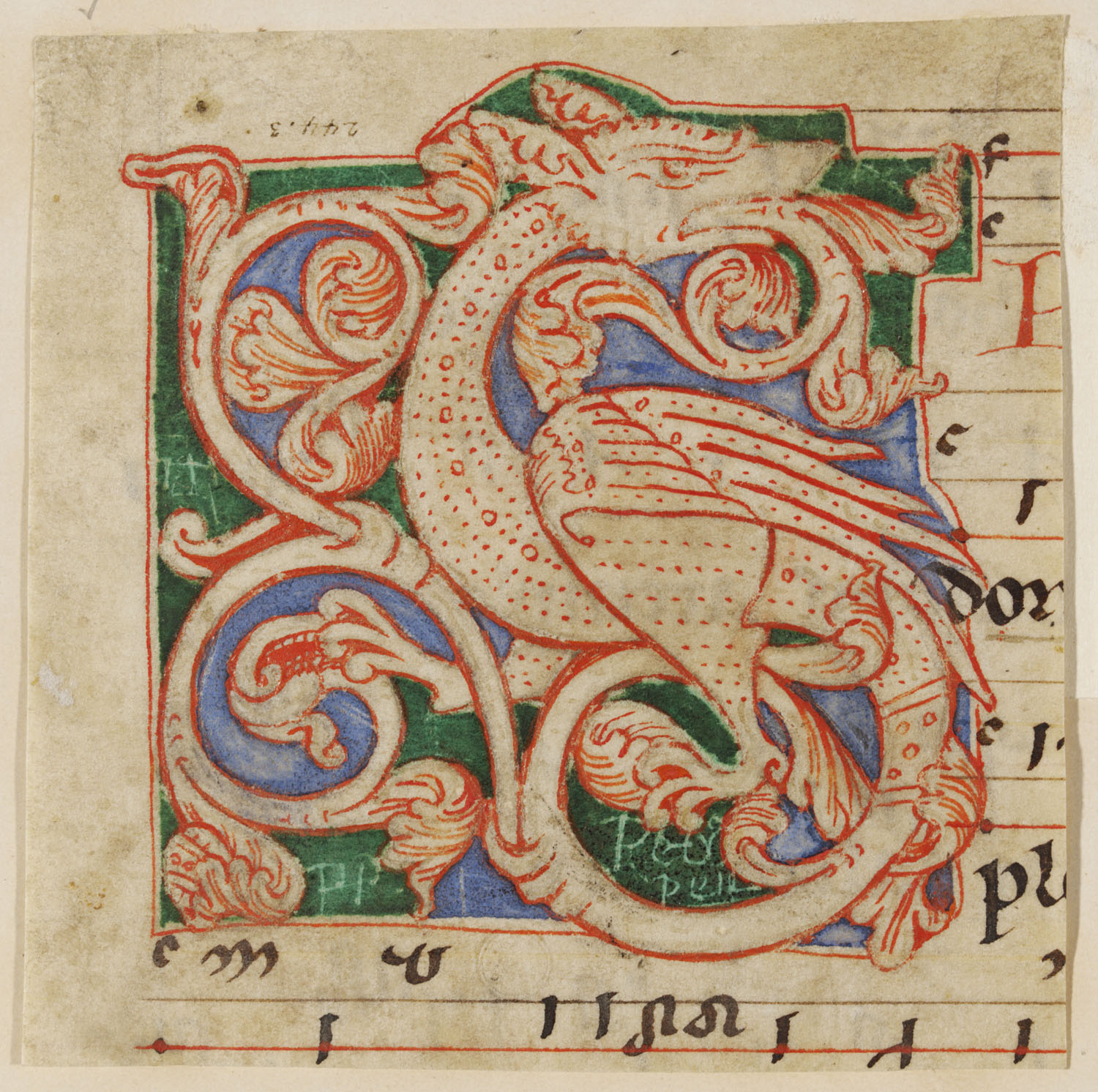
244:3, Leaf from choir-book with initial S in red pen-work on green and blue ground depicting a dragon. Netherland. late 12th century, © V&A Museum

https://www.vam.ac.uk/blog/museum-life/here-be-dragons-2 


So, I have a character in 13th century France, who, like his contemporaries, thought dragons were all very well in illuminations and such, (like the above), and for making moral and allegorical points--but as living creatures, they might be considered as exotic, remote, and belonging principally to the past.

Until one shows up in his life. Then he turns to old books for answers. 

 But what would he have found historically? Some interesting stuff, actually, in ancient bestiaries: https://bestiary.ca/beasts/beast262.htm

While the ancient sources included many fanciful details, even as they sought to be factual and comprehensive, their medieval successors had different aims, viewing the genre as an opportunity for making moral observations. Hence the solid association of the dragon with the devil, combining biblical sources with the ancient descriptions in these bestiary entries (such as those found in the Aberdeen Bestiary and many others).
 

For more information, and a fascinating overview article on dragons in the minds of Western peoples across the centuries: 

https://anunexpectedjournal.com/dragons-snakes-and-demons-a-medieval-and-biblical-bestiary-for-modern-minds/


Also, I skimmed through this article, which got me tracking in the right direction about bestiaries:

Witty, Francis J. “Medieval Encyclopedias: A Librarian’s View.” The Journal of Library History (1974-1987) 14, no. 3 (1979): 274–96. http://www.jstor.org/stable/25540985. 


Sunday, October 9, 2022

Tracking medieval titles and nobility


When I began writing about nobility, I had only a vague notion of the difference between a duke, an earl, and a count, so I had to research that

But English titles are one thing, and French another, so below are the titles that my current WIP-- historical fantasy set in 13th century France--needed (courtesy of that fascinating melting pot of sources, quora.

The title of a knight is Chevalier. A lesser Knight, ( eg son of a knight) is an Écuyer .

The title comes after the name when y whole name.

Eg “Richard de Longeville, Chevalier”

Or “Jean de Longeville, Écuyer”

To be a Chevalier, you had to be a member of an “Order of Knights”

When speaking to a Knight, he would be addressed as “Mon Seigneur” (My Lord)

From which derives the modern day word Monsieur.

There were other titles for Knights who had land posessions;

Duc, Prince, Baron, Marquis. Compte. Viscompte

In English , Seigneur became anglicised into “Sir”

Friday, September 23, 2022

Swords and strategy


You want the details in action to be relevant and right, so I was doublechecking the kinds of sounds swords make (when drawn, when clashing, etc.) and found this neat article in The Scientific American:

The Science of Swords: The Sound of Approaching Doom

Fascinating stuff, considering swords of various types, aerodynamics, and slicing technique among other things.


Monday, July 25, 2022

Character research

Image credit: 
How to Draw a Nose – Step by Step
Lesson by Stan Prokopenko
in Portrait Drawing Fundamentals

For developing 3-dimensional characters, there are all kinds of charts and sheets and personality tests, so I'm assembling a few here for order's sake:

Color code personality test (of four types--seems similar to 4 Temperaments)

Myers-Briggs 16 Personalities test

and this more general list of traits (including background, social, physical, etc--pretty extensive).

http://faculty.trinity.edu/sgilliam/principles/COSTUMEUNIT/karjala.html

And the list given by Lajos Egri in his The Art of Dramatic Writing (great book, even if you're not writing a play), and which I have saved as document somewhere shareable:

Lajos Egri Character chart

Physiology:

1.      Sex:

2.      Age:

3.      Height & Weight:

4.      Color of hair, eyes, skin:

5.      Posture:

6.      Appearance (good-looking, over- or underweight, clean, neat, pleasant, untidy. Shape of head, face, limbs.

7.      Defects: (deformities, abnormalities, birthmarks. Diseases.

8.      Heredity:

SOCIOLOGY

1.      Class: (lower, middle, upper)

2.      Occupation: (type of work, hours of work, income, condition of work, union or non-union, attitude toward organization, suitability for work).

3.      Education: (Amount, kind of schools, marks/grades, favorite subjects, poorest subjects, aptitudes)

4.      Home life: (parents living, earning power; orphan; parents separated or divorced, parents’ habits, parents’ mental development, parents’ vices, neglect. Character’s marital status).

5.      Religion

6.      Race, nationality

7.      Place in community: leader among friends, clubs, sports.

8.      Political affiliations

9.      Amusements, hobbies: (books/newspapers/magazines they read)

PSYCHOLOGY

1.      Sex life, moral standards:

2.      Personal premise, ambition

3.      Frustrations, chief disappointments

4.      Temperament: (choleric, phlegmatic/easygoing, pessimistic/melancholic, optimistic/sanguine)

5.      Attitude toward life: (resigned, militant, defeatist)

6.      Complexes: (obsessions, inhibitions, superstitions, phobias)

7.      Extrovert, introvert, ambivert

8.      Abilities: (languages, talents)

9.      Qualities: (imagination, judgment, taste, poise).

10.   I.Q.


Wednesday, June 29, 2022

Alternate History Considerations

 Alternate History:

Considering what might have changed had William of Normandy lost the Battle of Hastings...

https://www.quora.com/How-would-history-change-if-King-Harold-Godwinson-had-won-the-Battle-of-Hastings

There are various ways William could have lost during the battle:

  1. When his horse was cut down and threw him facedown into the mud, if Earl Gyrth had not been intercepted he would have slain William. His army surrenders.
  2. William survives but still loses the battle. His army remnants surrender.
  3. William dies, but his subordinates continue the battle and win. Alan Rufus makes his father Eudon (Edward the Confessor’s older cousin) king of England.
  4. William dies, his subordinates continue the battle and lose. His army remnants surrender.

Now, if William dies, then his eldest son Robert Curthose is too young (not to mention incompetent) to rule Normandy. I see trouble for the Duchy. How much trouble?

Conan II, Duke of Brittany, legitimate heir to Normandy, who is already leading an exceedingly powerful army, seizes Normandy in a lightning campaign in October 1066.

In our timeline, Conan attacked northern Anjou first and took its supposedly impregnable frontline castles before he marched into Mayenne and allegedly died of poison before he could reach Normandy.

In the “William dies” scenario, Normandy is in turmoil, dissension and civil war, and most Norman citizens welcome Conan as the strongest candidate for Duke and the one most likely to restore order.

Conan is descended from Alfred the Great through the Carolingian king Louis IV of France. He has great credentials, and the power, to rule both France and England.

Breton government has a light hand and a penchant for wealth creation, its officials being jurists and merchants. They are also keen on scientific teaching and learning.

Consequently, a cross-Channel empire is formed, like Henry II’s a century later, but larger, stronger, richer, better educated and definitely popular.

Expect accelerated political, social, economic and technological progress, creating a modern world without the intervening oppression, fanaticism and civil wars.